Most likely, the flames will destroy themselves

火は火みずからをほろぼすだろう

The Interconnectivity of Cause and Effect
Every action provokes a reaction

A visit to Ōkunoshima—the island where Japan secretly manufactured chemical weapons during the Second World War—led me to the life and legacy of Fritz Haber, a scientist whose work embodies the paradoxes of human progress. Awarded the 1918 Nobel Prize in Chemistry for the synthesis of ammonia, Haber transformed modern agriculture and helped sustain unprecedented population growth. Yet his pioneering research also became inseparable from the history of chemical warfare, a scientific legacy ultimately entwined with the later development and use of Zyklon B during the Holocaust. This body of work reflects on the unintended consequences of human ingenuity and the fragile boundary between creation and destruction.

The exhibition takes its title from Flames, Me, Memory, the poem Mutsuo Takahashi wrote in response to this body of work. This marks Axelvall's second collaboration with Mutsuo Takahashi, following the monograph Go to become (Roshin Books, 2017), for which Takahashi contributed original poetry.

English translation by Jeffrey Angles, Professor, Japanese Literature and Translation, Western Michigan University.

German experimental music duo Arigto composed a four-part soundscape featuring Takahashi's recitation of the poem in Japanese, with Kamilla Reinshagen and Axelvall providing the voices for the English translation.

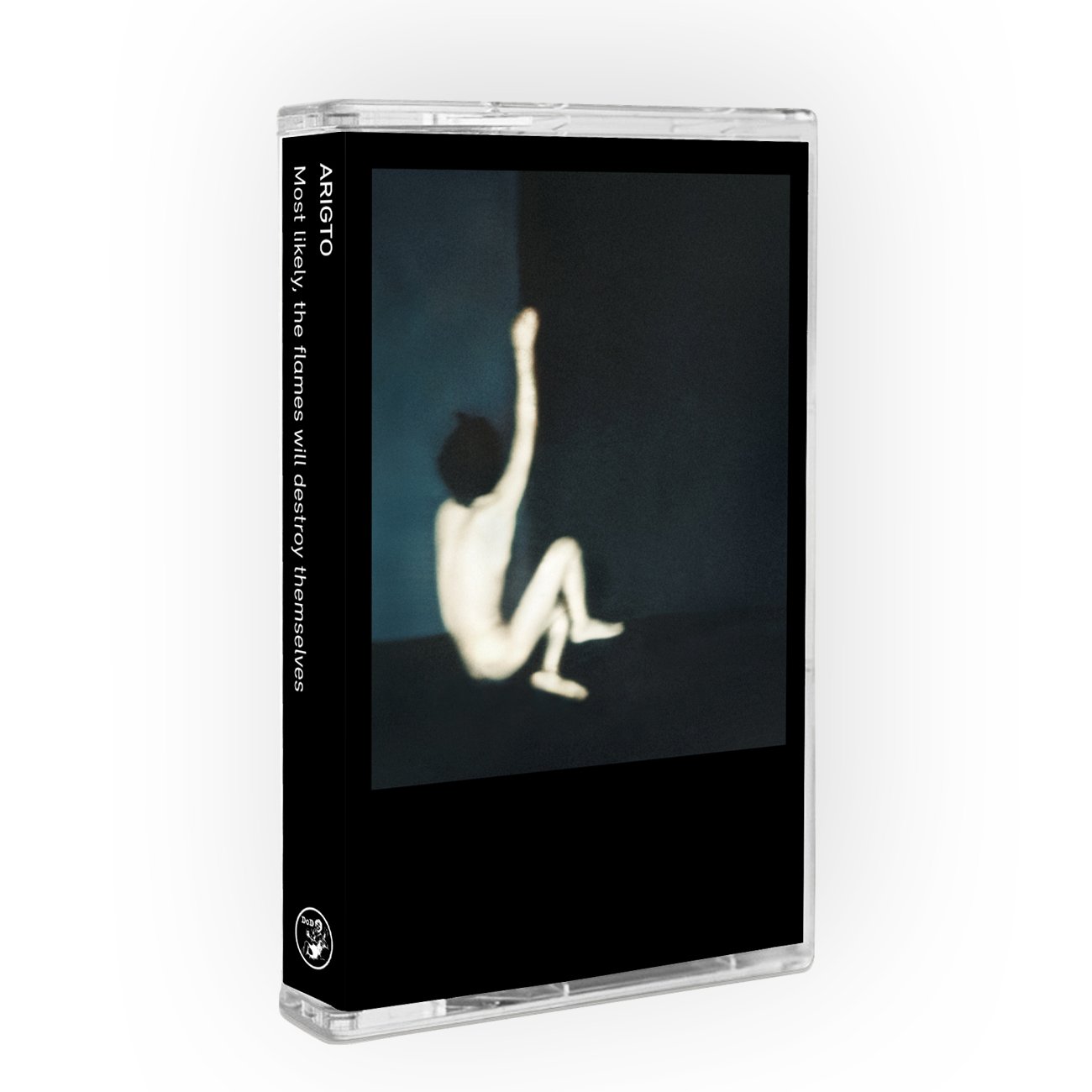
sound: Arigto voice: Mutsuo Takahashi

_____________________________

Today, Ōkunoshima is known for its population of wild rabbits. Introduced after the war, they stand in quiet contrast to the island's past, where rabbits were once used to test chemical weapons. Their presence serves as a poignant reminder that history is never erased; it is transformed, leaving traces that continue to shape the present

_________________________________________________________________________

Part One
(first presented at Ken Nakahashi Gallery Tokyo)

The human figure, a recurring presence in my practice, appears exposed, obscured, and fragmented by veils of color—vulnerable amidst the consequences of human ambition.

the works below are 700x825mm washi on wood panel, abraded surface, text in grease pencil

_________________________________________________________________________

Part Two
(first presented at LOWW Gallery Tokyo)

Ōkunoshima, the center of Japan's chemical weapons program, was kept secret throughout its operation. From 1927 until the end of World War II, the island was removed from official maps. When the war ended, all records of its activities were destroyed and local residents were ordered to remain silent. The truth eventually reached the Allied occupation forces, who ordered the immediate destruction of the remaining stockpiles of chemical agents and poison gases. Some were dumped at sea or buried. Others, stored in cisterns too large to move, were incinerated inside concrete domes built into the mountainsides. The scorch marks left by those fires remain visible today and are documented in this series of ammonium-oxidized, UV-cured prints on brass.
Encountered in the crepuscular light of late summer, the scorched concrete assumed an unexpected beauty. The glowing walls recalled Japanese gold-leaf screen paintings and evoked a sense of apophenia—the human tendency to perceive meaning or imagery in random patterns.

the works below are 400x500mm UV cured ink on brass sheet, ammonium oxidized


Close studies of fireworks captured at the moment their brilliant explosions dissolve into nebulous clouds of color. Fireworks are one of the few instances in which explosives are used for celebration rather than destruction. Here, their lingering vapors become metaphors for the coexistence of violence and beauty, chaos and order, memory and forgetting.

the works below are 350x350mm washi on wood panel, abraded surface

Next
Next

Lunar Eclipse